From Surveys to Real-Time Organizational Insight
Traditional surveys capture opinions but miss the deeper dynamics shaping decisions. Modern platforms are changing how organizations gather insight.
Organizations have spent decades trying to understand what is happening inside their own operations.
Leaders rely on employee surveys, quarterly reports, status meetings, and project dashboards to gauge progress and identify emerging risks. These tools can provide useful snapshots, but they rarely capture the full picture of how work actually moves through an organization.
In the age of artificial intelligence and distributed teams, the limitations of traditional organizational insight are becoming increasingly clear.
AI initiatives introduce new layers of complexity across departments, workflows, and decision-making processes. Signals emerge from many places at once: engineering teams deploying new models, product groups experimenting with AI features, data pipelines feeding analytics platforms, and operational teams attempting to integrate new insights into day-to-day processes.
Understanding whether these initiatives are succeeding requires more than occasional reporting cycles.
It requires real-time visibility.
The Limits of Traditional Organizational Feedback
Most enterprises still rely heavily on retrospective feedback mechanisms.
Employee surveys may be conducted once or twice per year. Project updates are shared in periodic meetings. Performance reviews capture reflections on work that may have occurred months earlier.
While these tools provide useful perspectives, they are inherently delayed.
By the time leaders recognize that an initiative is struggling, significant time and resources may already have been lost.
This delay becomes especially problematic in AI transformation initiatives, where experiments move quickly and the conditions surrounding projects change rapidly.
Signals about adoption, trust, workflow integration, and operational readiness can shift week by week.
Organizations that rely only on static reporting tools often miss these early signals.
Why AI Transformation Requires Real-Time Insight
Artificial intelligence initiatives rarely fail because the technology itself is flawed.
More often, they stall because the broader organizational system cannot adapt quickly enough.
Teams may struggle to trust AI outputs.
Operational workflows may not integrate new insights effectively.
Leadership may lack visibility into which initiatives are gaining traction and which are drifting.
These challenges emerge across three interconnected dimensions:
People.
Process.
Technology.
Technology is often the most visible dimension. It includes models, data pipelines, infrastructure, and tools.
But people determine whether those tools are trusted and adopted.
Processes determine whether insights can be translated into operational decisions.
When any of these three dimensions fall out of alignment, progress slows.
Real-time organizational insight allows leaders to detect these signals early.
Moving Beyond Surveys Toward Operational Intelligence
Modern organizations are beginning to shift from periodic surveys toward continuous insight systems.
Instead of asking employees for feedback once a year, leaders can analyze signals generated by everyday work:
- Collaboration patterns across teams
- Adoption metrics for new AI tools
- Operational workflow integration
- Decision-making cycles within departments
- Cross-team dependencies and bottlenecks
These signals help leaders understand how work actually flows through the enterprise.
More importantly, they allow organizations to identify friction points before they become systemic problems.
The Role of Decision Intelligence
Real-time insight alone is not enough.
Leaders also need guidance on what actions to take when signals indicate potential issues.
This is where decision intelligence platforms play a critical role.
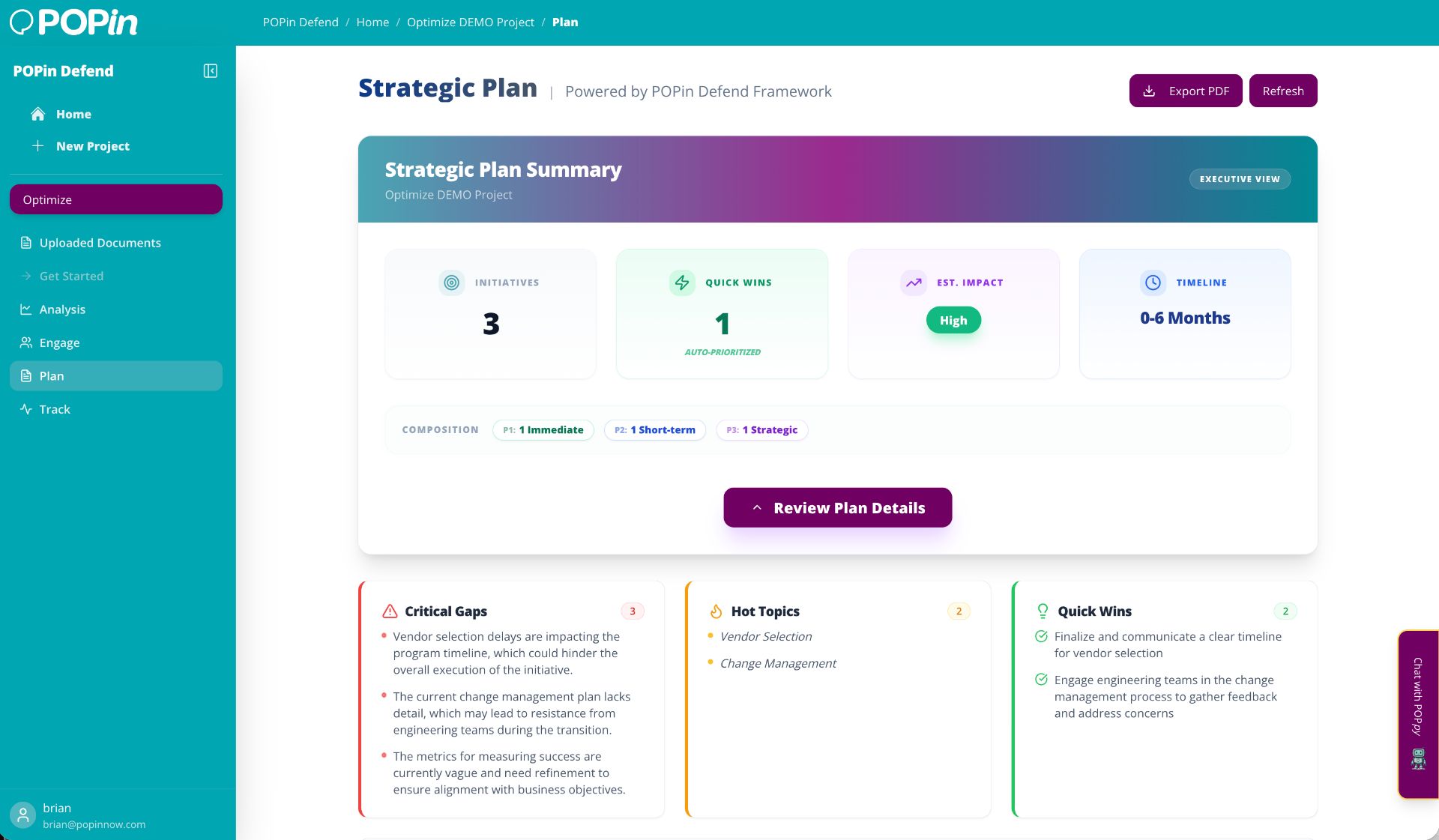
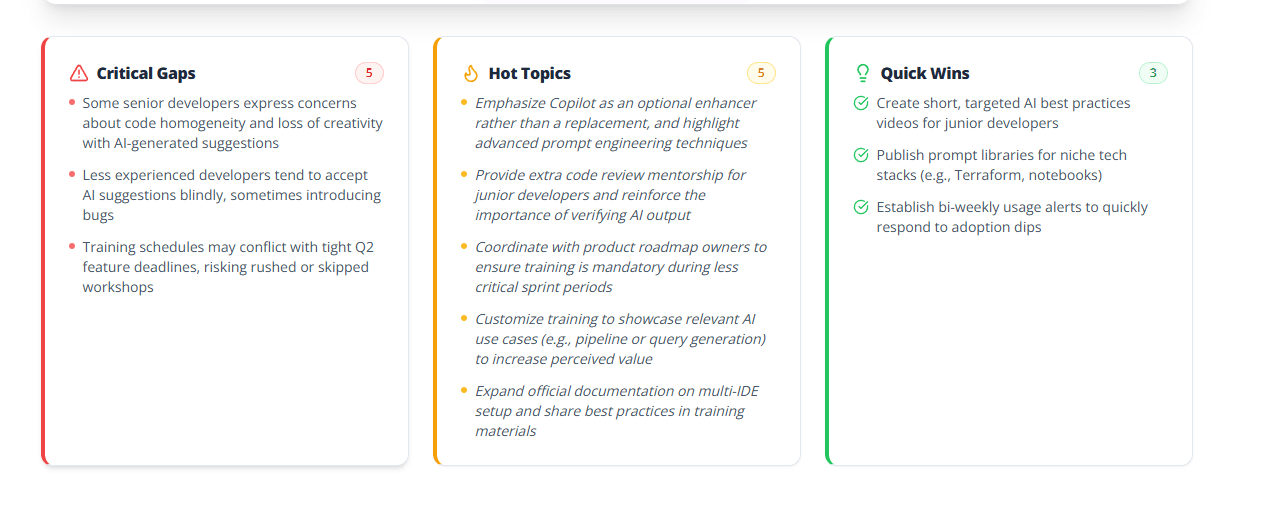
Decision intelligence systems aggregate signals across people, processes, and technology to help leaders understand:
- Where initiatives are gaining momentum
- Where adoption challenges are emerging
- Which teams require additional support
- Which programs deserve increased investment
Instead of simply presenting more dashboards, these platforms help organizations move from observation to action.
From Organizational Visibility to Organizational Alignment
Ultimately, the goal of real-time organizational insight is alignment.
When leaders can see how initiatives are progressing across teams and workflows, they can coordinate efforts more effectively.
They can strengthen adoption where needed, adjust processes to support new technologies, and ensure that initiatives are delivering measurable outcomes.
Organizations that build this capability gain a powerful advantage.
They are not forced to rely on outdated snapshots of organizational health. They can see the system evolving in real time.
And in a world where AI transformation is accelerating, that visibility can make the difference between stalled initiatives and sustained innovation.
Book a free 30-minute POPin First Look →